
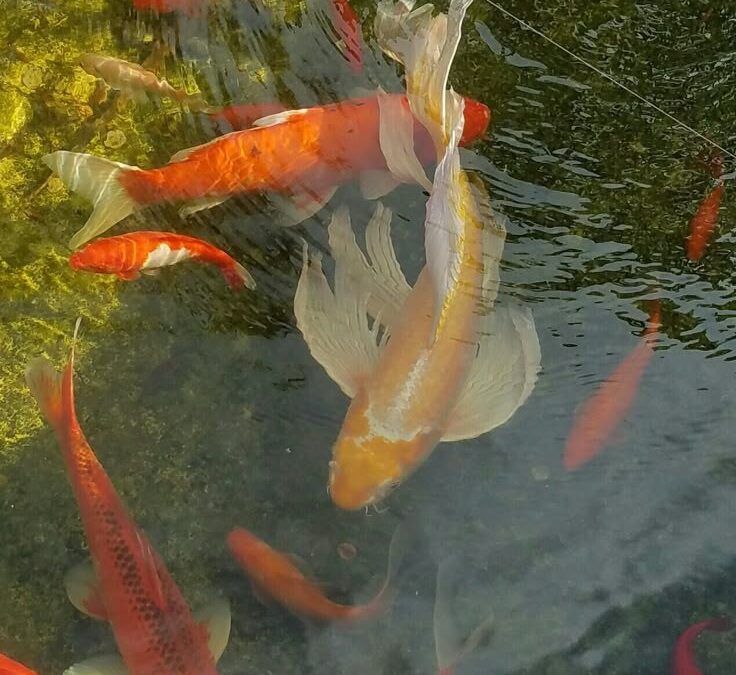
Winter koi feeding is one of the most important aspects of seasonal pond care, as colder water temperatures slow a koi’s metabolism and digestive system. When winter arrives, koi cannot process food in the same way they do during warmer months. Feeding the wrong food, or feeding too often, can lead to poor digestion, water quality issues, and long-term health problems. Choosing the correct winter diet helps koi remain healthy, reduces stress on the pond’s filtration system, and prepares fish for spring.
Winter Koi Feeding: Why the Right Food Matters
 During winter, koi become less active and eat far less. As water temperatures drop below 10–12°C, their digestive enzymes slow down significantly. Winter koi feeding should therefore focus on easily digestible foods, such as wheatgerm-based diets. These foods break down quickly in the koi’s gut, reducing waste and preventing undigested food from polluting the water.
Incorrect feeding during winter often results in excess protein and fats in the pond. Koi cannot digest these nutrients efficiently in cold water, which leads to uneaten food and increased ammonia levels. This places unnecessary strain on bio filtration and can cause poor water quality at a time when beneficial bacteria are also less active.
Winter feeding also involves feeding less frequently. In very cold conditions, koi may not need food at all. Observing fish behavior is essential; koi that remain inactive at the bottom of the pond should not be fed. Overfeeding during winter is one of the most common causes of water quality problems and fish illness.
By following correct winter feeding practices, pond owners protect koi health, maintain stable water conditions, and reduce maintenance demands. Proper winter nutrition ensures koi conserve energy, avoid digestive stress, and emerge from winter strong and ready for increased feeding as temperatures rise in spring.